A MONUMENTAL CITY
Jacksonville: A Monumental City of the Future
By Fitz Desprez · September 12, 2026
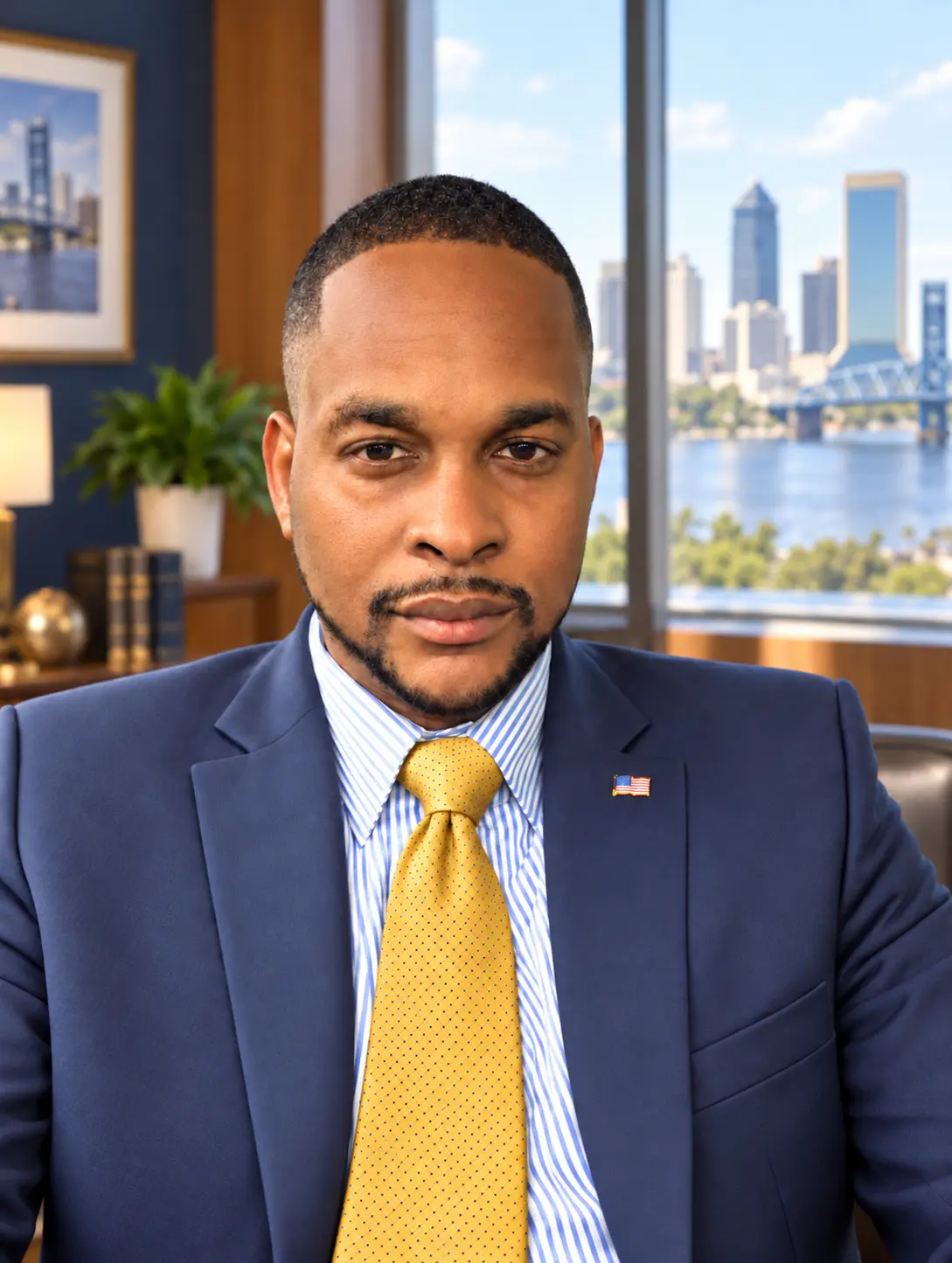
My vision is a Jacksonville that works reliably, welcomes families and enterprise, protects people according to real risk, and competes for opportunities on the world stage. This is an ambitious campaign framework—not a promise to bypass law, budgets, contracts, engineering, public input or the Jacksonville City Council. In the first 100 days, I would establish facts, publish baselines and begin lawful action. During the first two years, I would focus on delivery. By the end of four years, residents should be able to measure whether daily life is safer, cleaner, healthier, easier and more affordable.
The governing standard: promise the work, publish the evidence
I will not describe a proposal as completed before financing, authority and execution exist. My administration would begin every major initiative with a responsible owner, a public timeline, a legal pathway, a funding strategy and measurable outcomes. Some actions can begin administratively. Others require Council legislation, independent-authority cooperation, competitive procurement, collective bargaining, state or federal partnership, or private investment.
A monumental city is not created by one building or one event. It is created when the streetlight works, the pothole is repaired, emergency personnel can respond, a permit has a clear answer, a senior can reach services, a young person can see a future, and employers believe Jacksonville can execute. Big ambition and everyday competence must advance together.
The first 100 days: establish control, urgency and public accountability
- Publish a citywide service baseline covering potholes, resurfacing, sidewalks, drainage, blight, parks, permitting, emergency response and unresolved resident requests.
- Launch a public delivery dashboard with responsible departments, funding status, milestones, expected dates and explanations for delays.
- Convene JSO, JFRD, emergency management, venue operators, hospitals, schools, transit partners and neighborhood leaders for a coordinated public-safety and major-event readiness review.
- Order a department-by-department performance and duplication review focused on service value, vacancies, procurement delays, outdated processes and avoidable costs—not arbitrary cuts.
- Create a pothole, dangerous-intersection and streetlight rapid-response list using inspection data and resident reports, with safety risk determining priority.
- Begin a clean-city surge against illegal dumping, dangerous debris and repeat blight while improving convenient reporting and transparent follow-up.
- Open a small-business permit and procurement help desk that gives applicants one understandable checklist, a case owner and a status they can track.
- Map city-owned and underused property that may support workforce hubs, community centers, veterans services, housing partnerships or economic development after proper review.
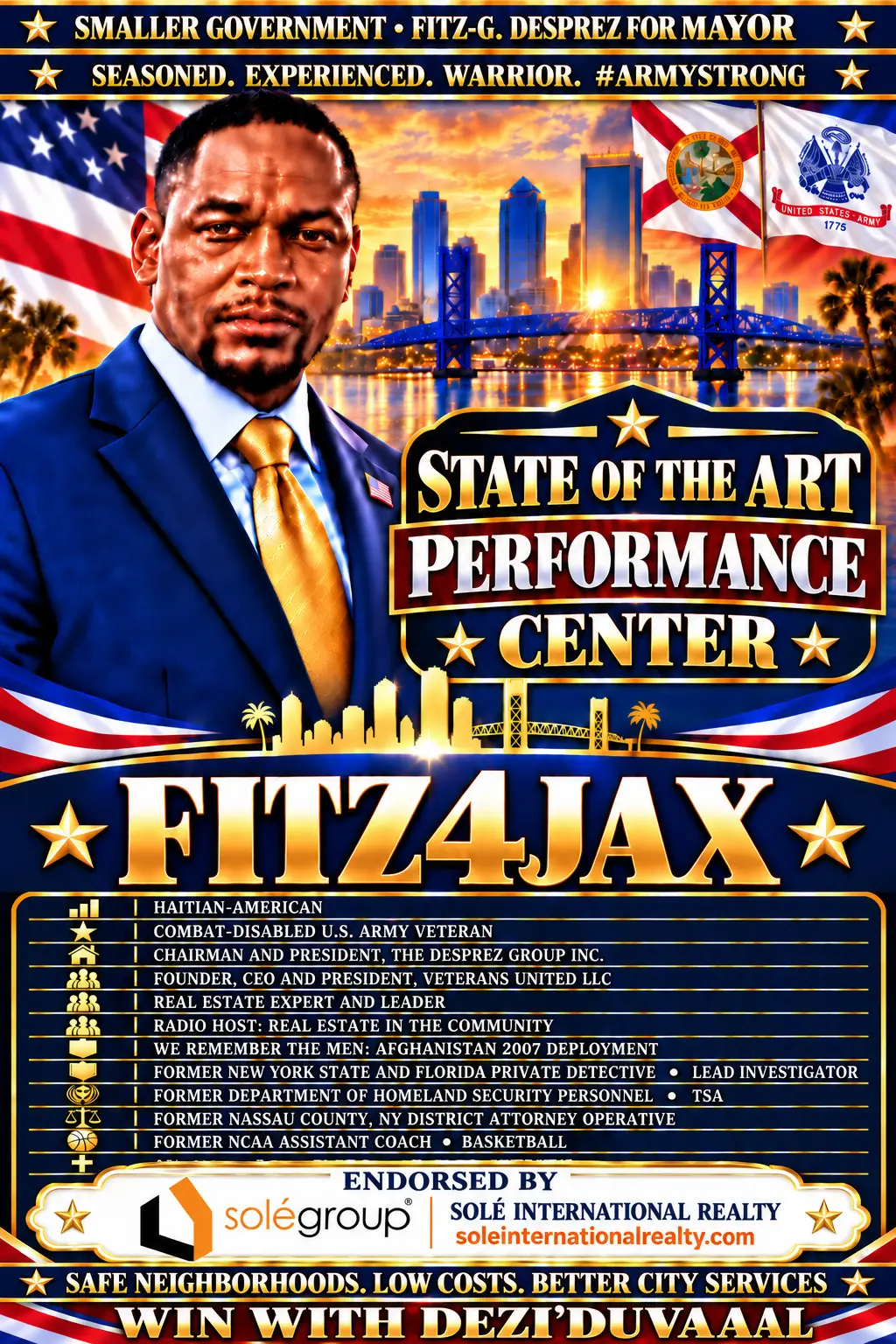
- Start feasibility and market work for a world-class performing arts district, major-event strategy, hotel capacity and a long-term professional basketball recruitment effort.
- Publish a 100-day report identifying what began, what changed, what requires legislation, what requires funding and what could not responsibly proceed.
Safer neighborhoods: friendly service and firm, constitutional enforcement
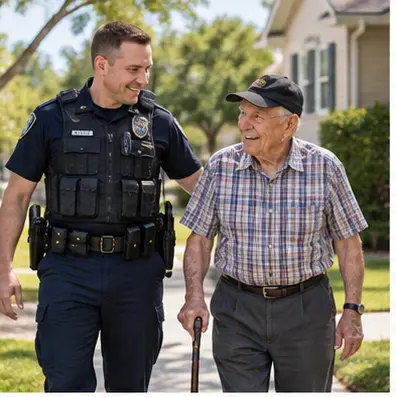
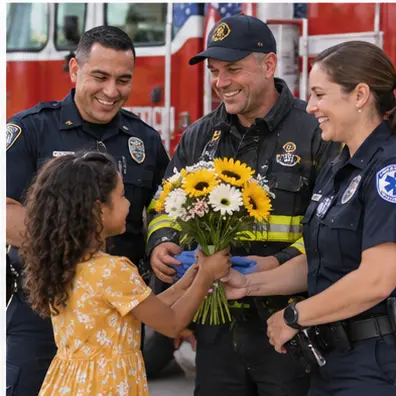
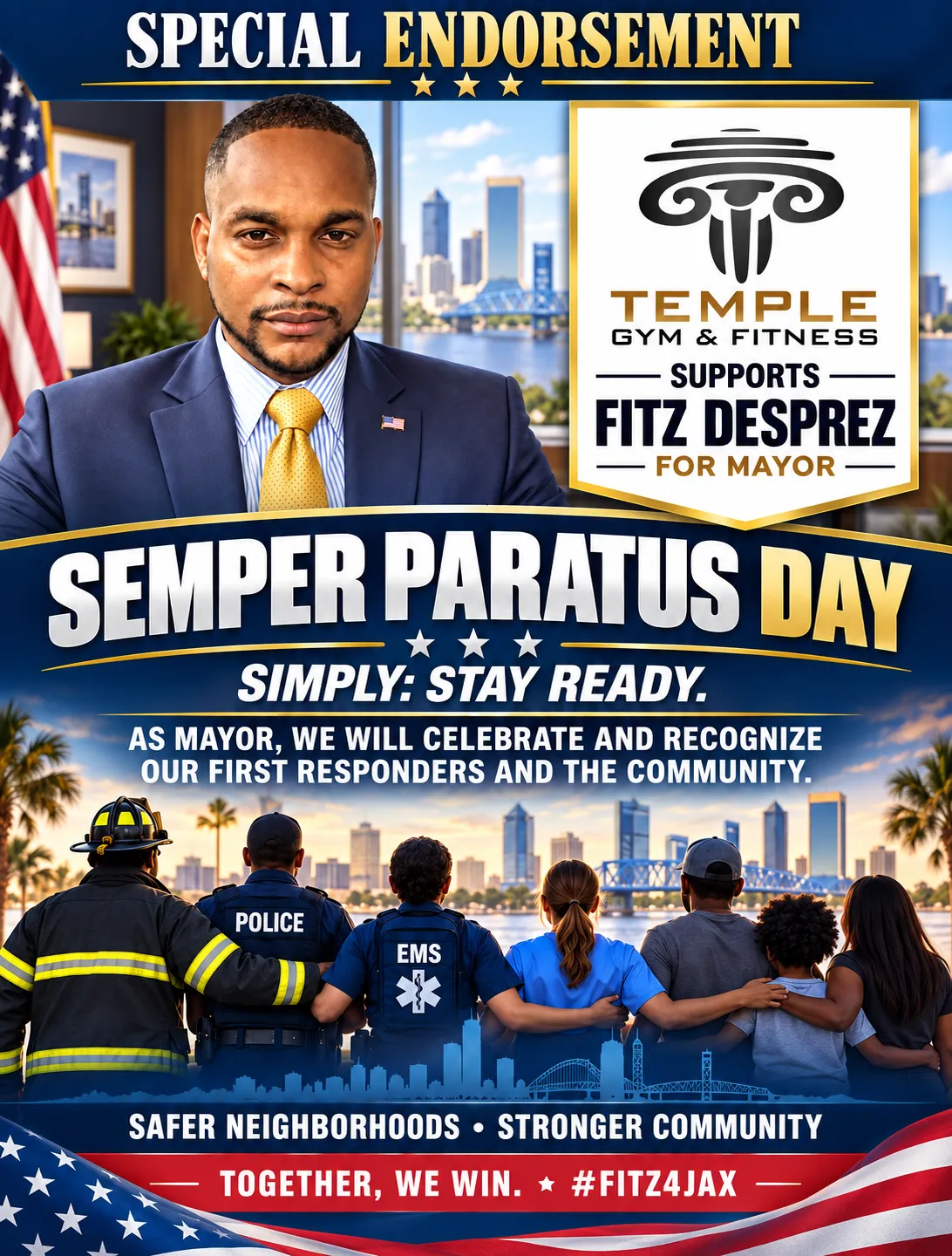
My public-safety approach supports professional officers and first responders while demanding lawful, respectful and accountable service. Friendly policing means officers know neighborhoods, communicate clearly and build trust before a crisis. Toughness on crime means focusing limited resources on violence, repeat dangerous conduct, trafficking, illegal guns used in crimes and coordinated criminal activity while respecting due process.
Safety also depends on lighting, maintained public spaces, youth opportunity, behavioral-health coordination, traffic design and rapid code response. Police cannot be the only answer to every social failure. The mayor should bring departments and community partners into one operating picture and publish whether the combined strategy is working.
Security for athletes, performers and visiting delegations—based on threat, not status
Jacksonville should be known as a city where athletes, performers, officials, families and fans can visit safely. I propose a standardized major-event security framework built around documented threat assessment. Protection would be scaled to credible risk, crowd size, venue design, travel routes and event intelligence—not fame, wealth or special treatment.
The framework would coordinate event organizers, venue security, JSO, JFRD, emergency management, transportation, hospitals and relevant state or federal partners. Private organizers should pay their fair share of event-specific costs through transparent agreements. Plans should cover arrival routes, hotels, practice sites, crowd management, emergency medical response, evacuation, cyber threats, stalking or targeted violence, and post-event traffic.
Jacksonville as a hub for world-changing conversations
I want Jacksonville to compete for civic, business, veterans, faith, technology, health, cultural and international forums where difficult questions can be discussed with dignity. The city can convene leaders without turning City Hall into an ideological gatekeeper. Forums should welcome serious disagreement, protect speech and safety, and produce public summaries or practical commitments when appropriate.
A coordinated convention, arts and riverfront strategy can make these conversations economically useful as well as meaningful. Visitors use hotels, restaurants, transportation, entertainment and local services. Jacksonville colleges, hospitals, veterans, entrepreneurs, artists and logistics leaders provide intellectual strength that can help the city become a trusted meeting place.
Competing for championship boxing and global sports-entertainment events
My administration would build a professional event-recruitment team to compete for world championship boxing, NCAA championship rounds and Final Fours, WrestleMania, AEW All In and other major events. Winning a bid cannot be guaranteed. It requires suitable venues, hotel-room blocks, transportation, production capacity, security, promoter relationships, sponsorship, financial discipline and a credible host committee.
Every proposal must include an independent economic-impact method, a clear cost ceiling, public-safety reimbursement, local-business participation and protection against open-ended taxpayer risk. We should pursue events that strengthen Jacksonville’s brand and economy, but we should walk away from deals whose costs exceed realistic public value.
A long-term push for professional basketball
I want Jacksonville to prepare a serious case for an NBA franchise or another top-level professional basketball opportunity. A mayor cannot award a team, control league expansion or guarantee an NBA Finals. The league, owners, investors, arena economics, media market and long-term fan support determine what is possible.
The responsible first step is a privately informed market and facility study: regional demand, corporate sponsorship, season-ticket interest, arena options, practice facilities, transportation, ownership prospects and public financial exposure. Youth basketball, college events, international exhibitions and neutral-site games can build the city’s basketball résumé while the long-range case develops.
Hotels, hospitality and the capacity to host
Major events require more than seats. They require rooms at different price points, meeting space, safe late-night transportation, trained hospitality workers, accessible facilities and neighborhoods that visitors want to explore. I would invite hotel and mixed-use investment where market evidence supports it, particularly around downtown, convention, sports and arts assets.
City government should provide predictable rules and timely decisions, not choose winners through private favors. Incentives, if proposed, must be performance-based, publicly disclosed and tied to verified investment, jobs, local participation and completion milestones. Development must also account for infrastructure, resilience and neighborhood impact.
The first two years: move from assessment to visible delivery
During the first two years, the administration should convert baselines into funded schedules. Residents should see resurfacing and pothole work prioritized by safety and condition; drainage projects moving through design and construction; sidewalk and crossing gaps addressed; parks and recreation facilities placed on reliable maintenance cycles; and resident service requests measured for both speed and quality.
The city should also implement a faster, clearer business-navigation system, expand workforce partnerships, advance veterans and community-center pilots, complete major-project feasibility work, and negotiate only those event or development agreements that pass legal, financial and public-value review. Quarterly scorecards would show where delivery is on time and where it is not.
Four-year progress: how residents should judge the administration
At four years, success should be visible in trends and lived experience: fewer dangerous infrastructure backlogs, faster and clearer service responses, cleaner public spaces, improved emergency readiness, stronger small-business satisfaction, more youth and veteran connections, and competitive private investment. The administration should publish before-and-after measures rather than relying on celebration alone.
For the largest proposals, four-year progress may mean completed construction, active construction, a fully financed plan, a successful recurring event portfolio, or an honest decision not to proceed. Progress must be defined project by project. Cancelling a weak deal can be responsible leadership; advancing an unfunded rendering is not.
Health, healthy longevity and care for older residents
A city cannot guarantee how long anyone will live, and municipal government does not control the entire health-care system. It can, however, improve conditions that support healthier lives: safe parks and walking routes, recreation, emergency readiness, cleaner neighborhoods, reliable transportation, housing stability, social connection and partnerships that help residents find care.
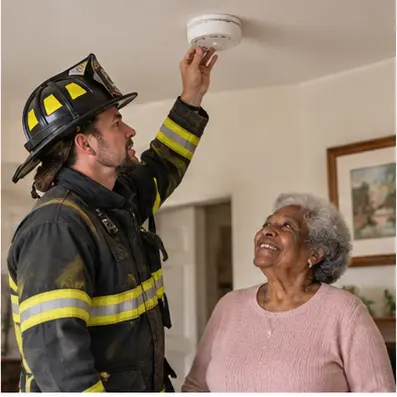
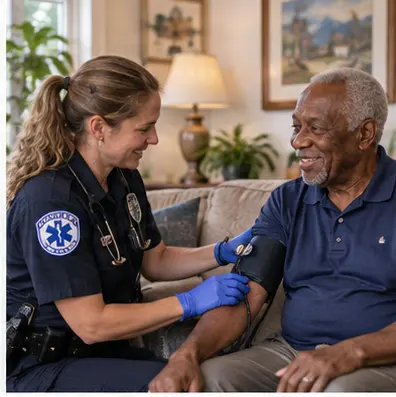
For seniors, I propose age-friendly service reviews, accessible public spaces, fraud-awareness partnerships, transportation coordination, wellness and recreation opportunities, and stronger connections among families, health providers, veterans organizations, faith communities and neighborhood groups. The goal is dignity, independence and more healthy years—not an unsupported promise.
Clean streets, working drainage and pothole accountability
Residents should be able to report blight, potholes, missed service and other hazards and see what happens next. My administration would strengthen one-request tracking, publish response standards and use repeated reports to identify system failures rather than close tickets without solving causes.
Pothole repair must connect to resurfacing, utility cuts, drainage and preventive maintenance. A temporary patch is sometimes necessary, but repeated failure at the same location should trigger an engineering review. Cleaning the city requires coordinated sanitation, code enforcement, public works, property-owner responsibility and convenient legal disposal.
More money in citizens’ pockets through value, opportunity and lower friction
City government cannot command household prosperity. It can reduce unnecessary local friction: review fees, shorten avoidable permit delays, maintain infrastructure before failures become expensive, encourage attainable housing supply, connect residents with training, and protect taxpayers through competitive procurement and transparent contracts.
The strongest path to more money in residents’ pockets is higher earning power and lower avoidable costs. I would track whether city policies help employers create durable jobs, whether workforce programs lead to employment, whether entrepreneurs can navigate City Hall, and whether public dollars deliver the service promised.
A pro-business city with less unnecessary interference
I have spent much of my life around business, real estate, entrepreneurship and service organizations. I understand that time, certainty, financing and execution matter. Responsible businesses should receive clear rules, one understandable process, timely inspections and decisions based on published standards rather than political access.
Less unnecessary regulation does not mean abandoning safety, worker protection, property rights, environmental responsibility or honest competition. It means reviewing duplicative steps, outdated requirements and unclear handoffs; digitizing processes; measuring decision time; and explaining every denial with a lawful reason and a path to correct it.
A world-class performing arts and civic district
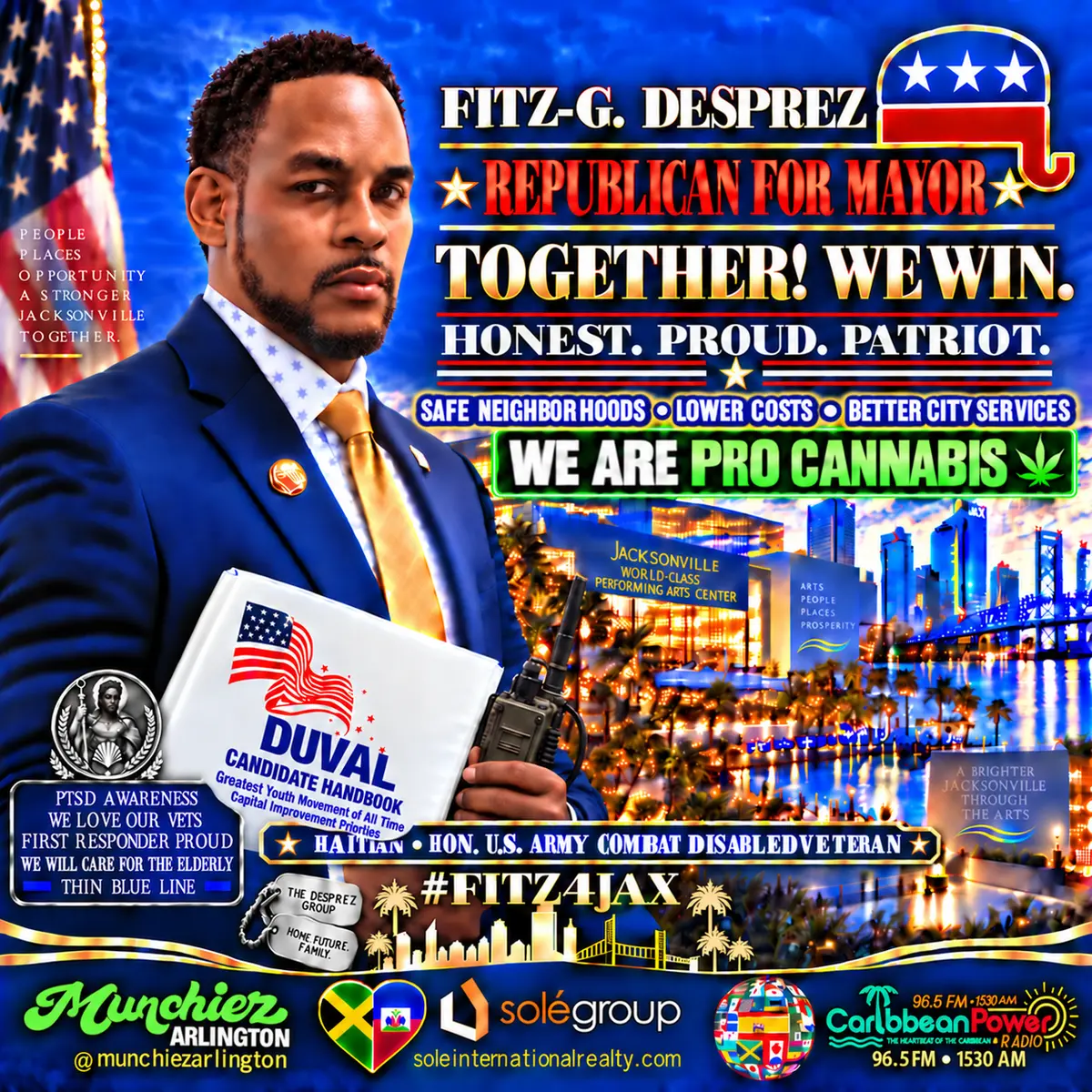
The proposed performing arts center remains a cornerstone of the long-term vision: performance halls, community stages, education, public plazas, restaurants and opportunities for local artists and businesses. It can also support conventions, civic forums, ceremonies and complementary visitor activity if market and operating plans justify the investment.
The concept must pass feasibility, site, design, engineering, transportation, operating and financial review. Public-private partnerships, philanthropy, naming rights, grants and venue revenue should be tested before major public commitments. Public benefits, cost limits, maintenance and community access belong in the agreement from the beginning.
Youth, veterans, families and community belonging
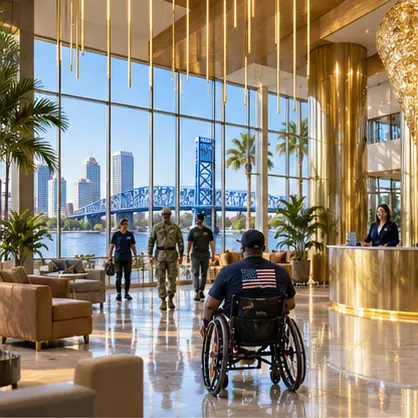
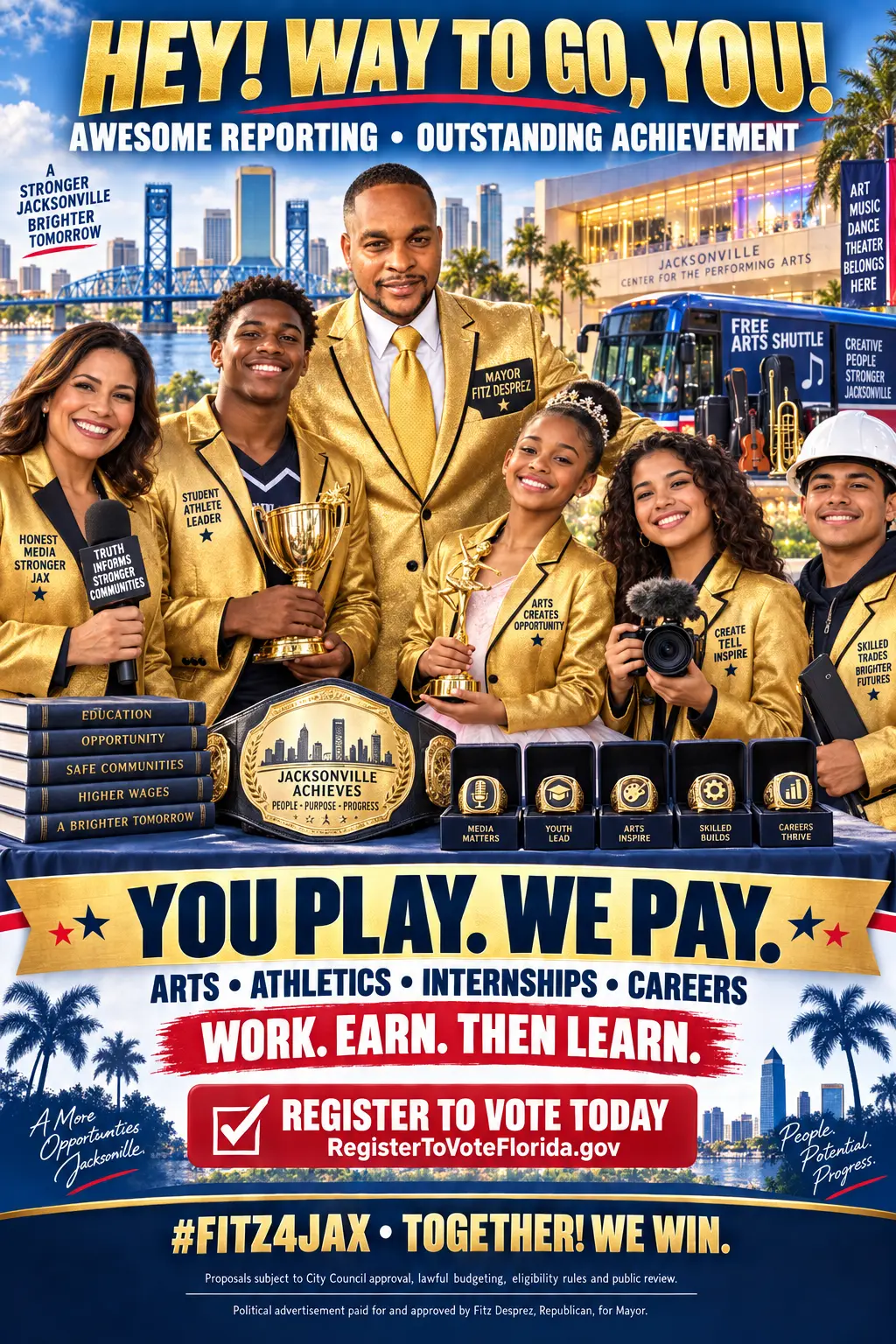
A safer city gives young people places to belong: sports, arts, parks, internships, apprenticeships, civic education and mentors. Veterans and military families should find Jacksonville easy to navigate, with coordinated access to trustworthy services, employment, entrepreneurship, recreation and peer connection. Families should experience a city that values safety, opportunity and affordable enjoyment.
Community centers can connect generations through games, exercise, dance, workshops, services and conversation. The performance and event strategy should reserve real space for Jacksonville talent and neighborhood participation so that residents are not spectators to their own city’s growth.
Questions residents may ask—and my direct answer
- Is this too much? The vision is broad, but execution is phased. The first task is to establish facts and priorities; projects advance only when authority, financing and operating capacity are real.
- Can a mayor guarantee an NBA team, Final Four, WrestleMania, All In or championship fight? No. A mayor can organize a competitive bid, improve readiness, recruit partners and negotiate responsibly. Leagues, promoters, owners and governing bodies decide awards.
- Will taxpayers be handed the bill? Every large proposal should publish total public exposure, private participation, operating risk and measurable benefits before approval. I oppose blank checks and hidden obligations.
- Does extra athlete security mean special treatment? No. Security should respond to documented threat and operational risk. Event agreements should allocate private and public costs transparently.
- Does tough-on-crime policy threaten civil rights? It should not. Enforcement must be constitutional, evidence-based and focused on safety. Professional accountability and effective enforcement strengthen each other.
- Does less regulation mean no standards? No. It means clear, necessary, consistently enforced standards with duplicate steps and needless delay removed.
- Can City Hall make seniors live longer or control health care? No. The city can improve health-supporting conditions and partnerships, but it should never guarantee an individual medical outcome.
- How will potholes and cleaning avoid becoming slogans? Public inventories, service standards, named ownership, completion data, repeat-failure review and quarterly reporting make performance testable.
- What happens if a feasibility study says no? We publish the result, consider lawful alternatives and do not force an unsound project simply to protect a campaign promise.
- How will neighborhoods share the benefit of major events? Host agreements should include local vendors, workforce pathways, transportation planning, neighborhood programming and transparent public accounting.
- What if revenue is weaker than forecast? Agreements need conservative assumptions, contingencies, cost ceilings and exit points. Residents should not carry unlimited downside risk.
- How will people know whether life improved? The administration will publish baselines, targets and regular results for safety, services, infrastructure, cleanliness, permitting, investment and participation.
A city ambitious enough to dream and disciplined enough to deliver
I want Jacksonville to be safe without losing warmth, prosperous without leaving neighborhoods behind, welcoming to business without surrendering accountability, and bold enough to host the world without neglecting the block outside our front door. My idea of paradise is not perfection. It is a city where people can trust the basics, pursue opportunity, enjoy culture and believe tomorrow can be better.
The commitment is preparation, precision, teamwork and public proof. Residents should challenge the plan, examine the numbers and hold the administration to its published standards. Together, we can build a monumental Jacksonville whose greatness is measured not only by skylines and events, but by the daily dignity and opportunity of its people.
Official context and planning sources
These links provide public context for city services, budgeting, tourism and transportation. The proposals above remain campaign positions subject to lawful review and approval.